How to Choose Turf Protection Boards: The 6 Specs That Decide It
1. Panel Thickness and Core Material
Thickness is what resists bending under load. Too thin, and a board that looks solid on a footpath will dish under a vehicle axle. The core material also decides whether the panel recovers its shape after repeated loading, or deforms permanently and leaves you with a surface that never sits flat again.
2. Load Rating
Ask directly: is the board rated for pedestrian loads only, or for vehicles and heavy equipment? This single answer separates event flooring from genuine heavy-duty turf protection. It should match your worst-case use, not your average one — the day a delivery truck takes a shortcut is the day the specification is tested.
3. Panel Size and Weight
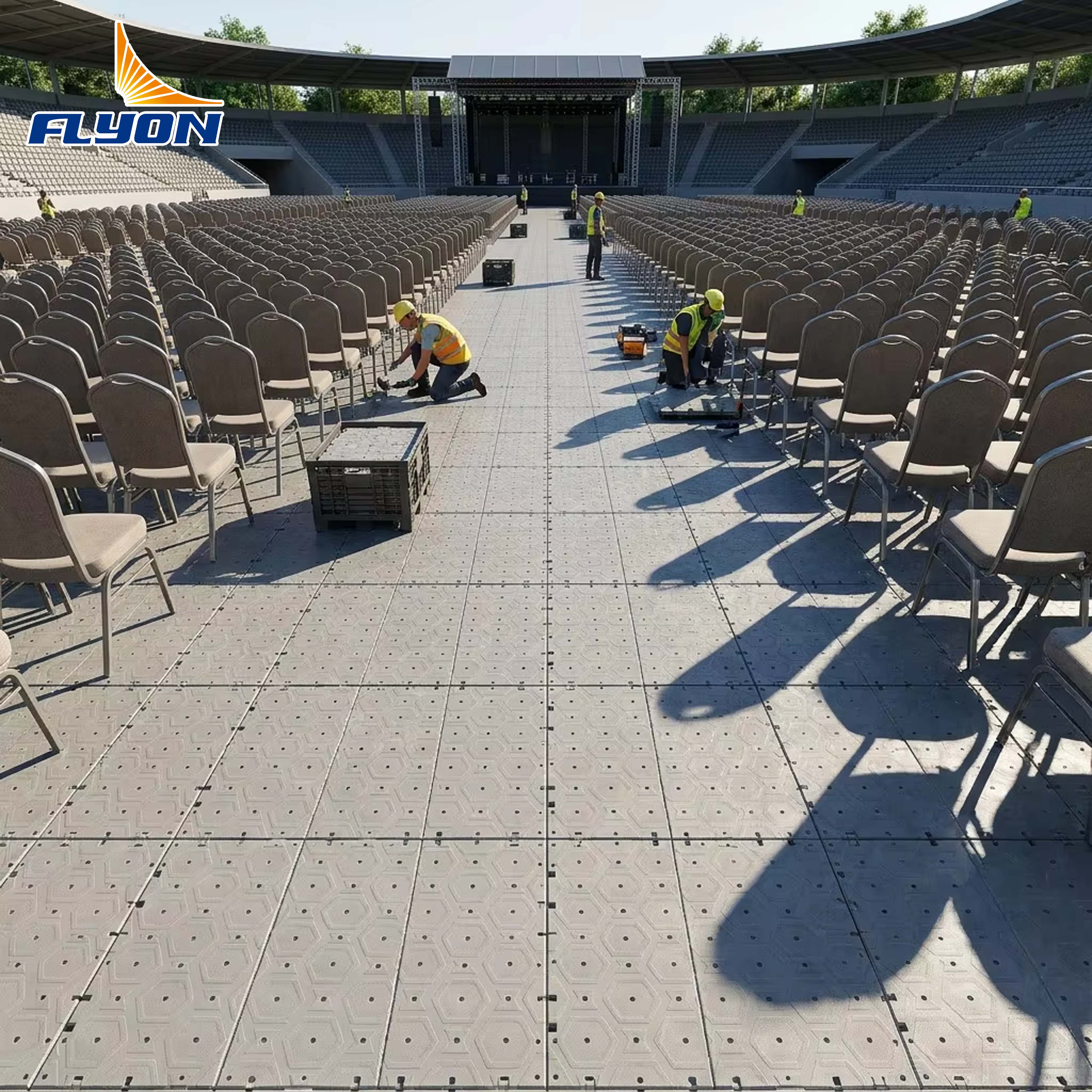
Bigger panels mean fewer joints and faster coverage, but each panel has to be handled by the crew you actually have. For stadium work, the practical target is the largest panel two people can carry and align without machinery. Panels that need lifting equipment to install rarely get installed as often as they should.
4. Connection System
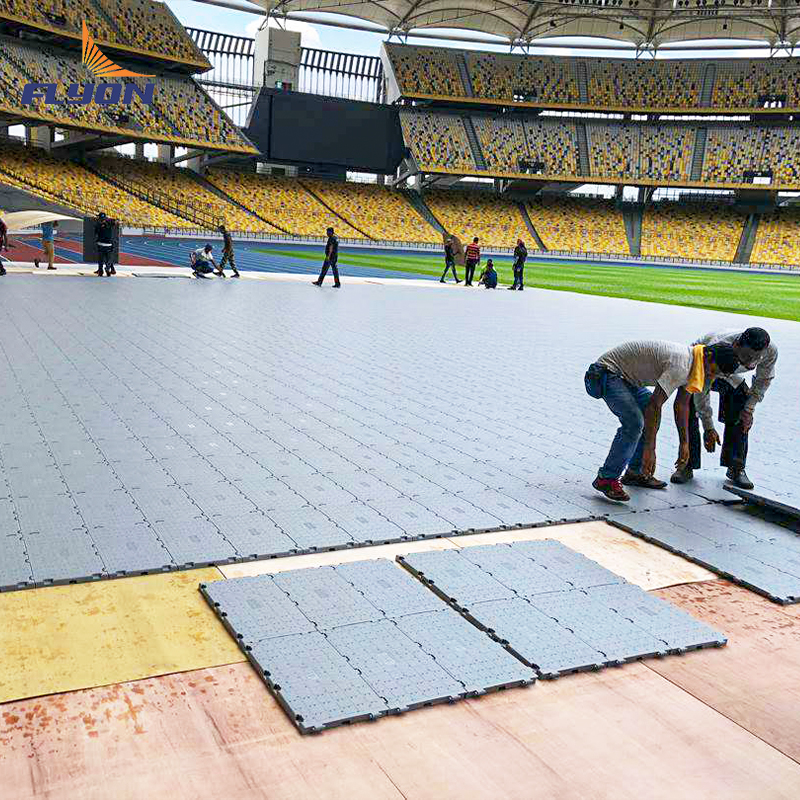
Loose-laid boards creep apart under traffic and create trip edges. A positive interlocking connection — mechanical, not friction — keeps the surface continuous and transfers load to adjacent panels instead of concentrating it at an edge. This also determines how fast the surface goes down and comes up.
5. Surface Traction
Rain, spilled drinks and morning dew all reduce grip. Look for a textured or profiled top surface rather than a smooth finish, and confirm the board stays stable when wet — including for the crews pushing carts and setting up staging.
6. Edge Ramps and Transitions
The most common failure point is the perimeter. An unprotected board edge acts as a step and a trip hazard, and it is the first part of the panel to break. Purpose-made ramp sections make the surface accessible to wheelchairs, carts and vehicles, and protect the edges that take the abuse.
Specification Checklist
Before you order, confirm:
- Panel thickness and core material
- Load rating — pedestrian or vehicle
- Panel dimensions and unit weight
- Interlocking connection mechanism
- Wet-weather surface traction
- Edge ramps and transition pieces
- Storage and transport method
- Reuse cycles and expected lifespan
Where Turf Protection Boards Are Used
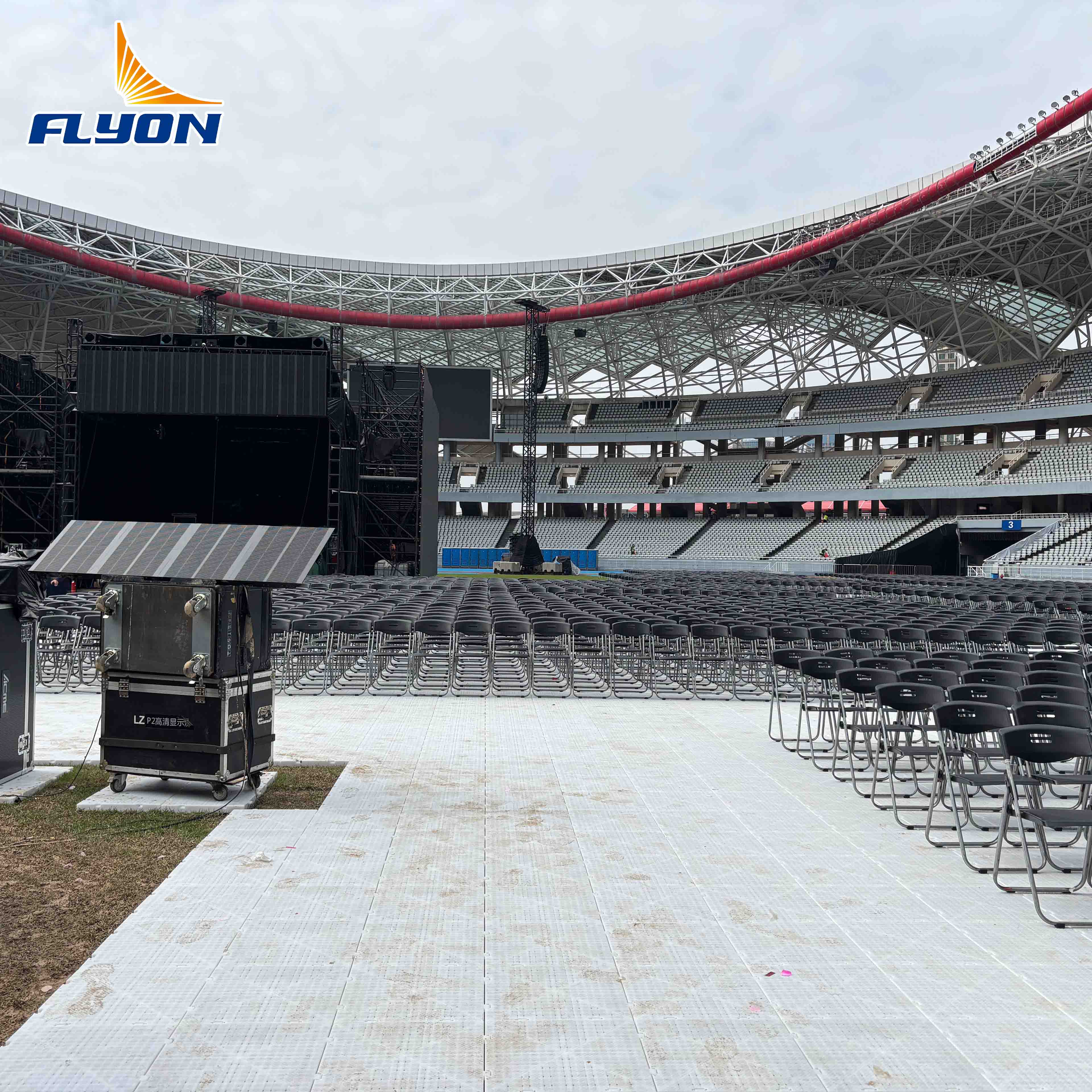
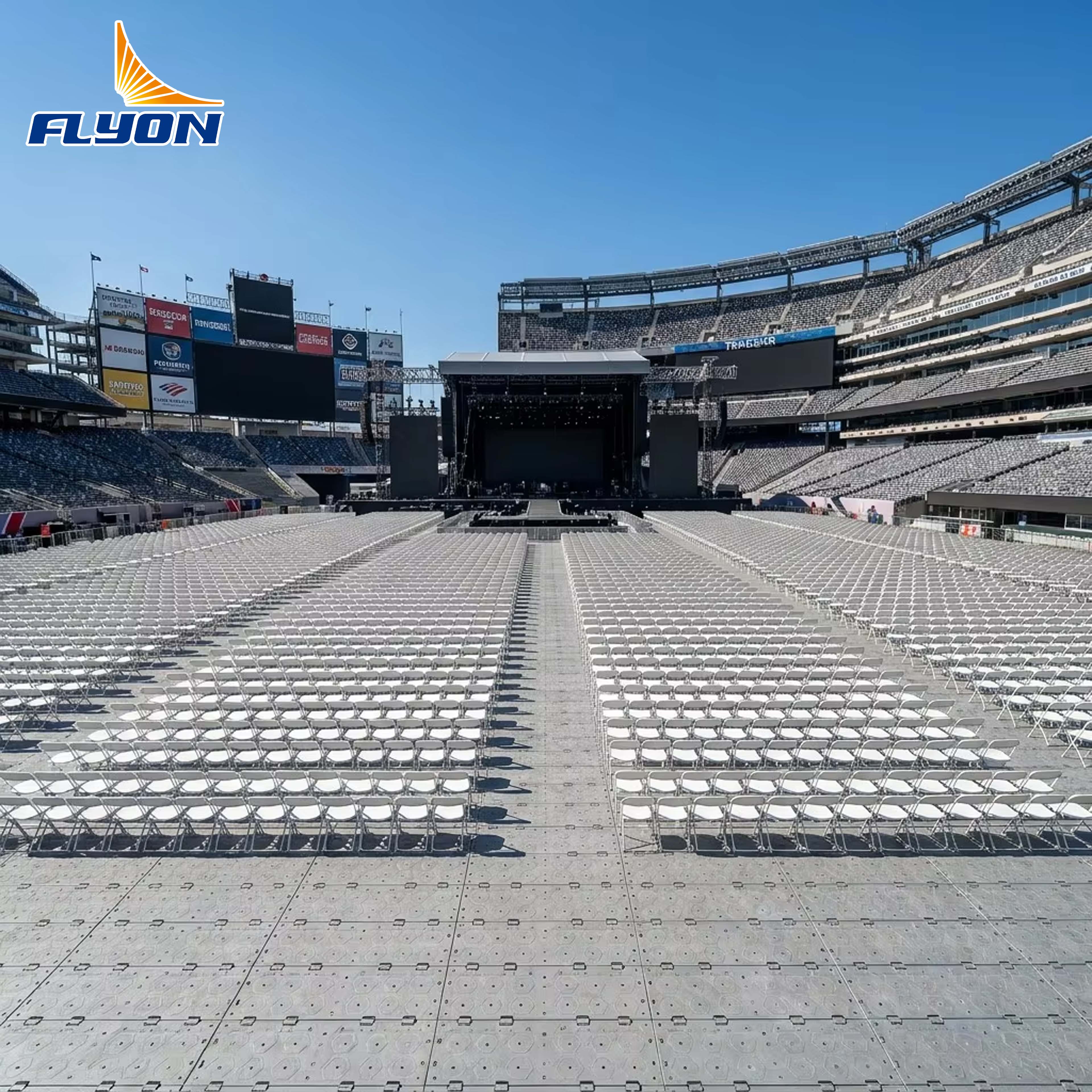
Concert and festival staging on natural grass · marathons and mass-participation events · stadium non-match-day events and hospitality areas · TV production and media compounds · cranes, lifts and heavy equipment access routes · sports-field multi-use for warm-ups, ceremonies and award podiums · temporary walkways and spectator routes.
How to Get the Right Specification
Send us three things and we will recommend the correct panel build:
- What will cross the surface — pedestrians, carts, cars, or heavy machinery
- How long the surface stays down, and how often it is reused per year
- Coverage area and any access or storage constraints
FAQ
Can I drive a vehicle over turf protection boards? Only on a heavy-duty build rated for vehicle loads — pedestrian-rated event flooring is not designed for it. Confirm the load rating before the first vehicle enters the site.
Will the grass recover after the boards come up? Boards prevent the two main causes of damage: compaction and tearing. Turf under a properly specified board surface typically recovers far faster than turf under unprotected traffic.
How long can the boards stay down? It depends on the turf and the season. The governing factor is light and air reaching the grass, so ask your supplier for the maximum duration they recommend for your turf type, and lift the boards sooner in hot, humid weather.
Can the boards be reused? Yes. They are a reusable asset, not a consumable — which is what makes the cost per event fall as the set gets used.
Talk to Us About Your Turf
Tell us what crosses your grass and how often, and we will come back with a specification and a quotation.
Email: Info@flyonsport.com | WhatsApp: +86 13534071985
Plywood, Plastic Mats or Turf Protection Boards? Four Ways to Save Your Grass
Interlocking Sports Flooring: Build a Multi-Sport Court Fast
Related Article